Research Article | | Peer-Reviewed

Effects of Aqueous Extract of Artemisia Annua on Immune System, Hematological Characteristics, Intestinal Micro-flora, Growth Performances and Carcass Yield of Broilers

Received: 8 November 2025     Accepted: 8 January 2026     Published: 16 January 2026
Views:       Downloads:
Abstract

Antibiotic residues are constantly being deposited in human organisms from the consumption of food of animal origin, leading to resistance and the health risks related to their use as growth promoters in animal feed and this has led to the ban of their use in animal feed by authorities. This restriction of their use has led to a resurgence of morbidity and mortality, a drop in growth performance, and consequently a decline in the economic profitability of farms making researchers to seek substitutes that play the same role without the same side effects. Plant-based products have been shown to possess properties that can play this role but their effects vary with form, dose, mode of administration and other factors. The present study was therefore designed to assess the effects of increasing levels of A. annua aqueous extract on growth performance, carcass and immune system organ characteristics, hematological parameters and intestinal microflora of broiler chickens. 288-day-old chicks were allocated to a completely randomized system comprising a base ration with no additives (T0-), a ration containing 0.1% antibiotic (T0+) and four rations with inclusions of 0.25, 0.5, 0.75 and 1 g aqueous extract of A. annua/Kg of feed with 3 replications each containing 16 chicks and treated till 49 days of age before sacrificing for data collection. The main results showed that the greatest live weight was obtained in T0.75-treatment birds with the least value in T0- at 49 days old with highest weight gain in T1. Feed conversion ratio was maximum in T0.25 and least in T1. T0.75 recorded significantly lower values for Escherichia coli while lactobacillus recorded values significantly (p<0.05) lower in T0+ than the others. Granulocytes and platelets registered the greatest values in T1. Thus, aqueous extract of A. annua had greater beneficial effects in most characteristics at a rate of 1 g/kg feed, and may be used as natural source of feed additive instead of antibiotics in broilers.

Published in International Journal of Animal Science and Technology (Volume 10, Issue 1)
DOI 10.11648/j.ijast.20261001.11
Page(s) 1-13
Creative Commons

This is an Open Access article, distributed under the terms of the Creative Commons Attribution 4.0 International License (http://creativecommons.org/licenses/by/4.0/), which permits unrestricted use, distribution and reproduction in any medium or format, provided the original work is properly cited.

Copyright

Copyright © The Author(s), 2026. Published by Science Publishing Group

Keywords

Broiler Chicken, A. annua, Growth Performance, Intestinal Microflora, Hematology

1. Introduction
Poultry farming has globally experienced a great rise (+4.3% per year) recently . Most animals raised for meat production in the past were given antibiotic-supplemented feed for therapeutic or sub-therapeutic purposes which lead to the accumulation of their residues in their products consumed by humans. The problem of transmission of antibiotic resistant bacteria to human through food chain and contamination of environment is another challenge of antibiotic usage in poultry production. Because of this constant deposit of antibiotic residues in human organisms from the consumption of food of animal origin, leading to resistance and the health risks related to their use as growth promoters, their use has been banned in animal feed by authorities. This restriction of their use has led to a resurgence of morbidity and mortality, a drop in growth performance, and consequently a decline in the economic profitability of farms .
This situation then sparked a rush towards the research of natural compounds derived from plants (phytobiotics) that can produce the same effects as antibiotics in animals without undesirable effects to humans and the environment . Among these alternatives, plant-based products like spices, essential oils, and phyto-additives play a very important role . We equally have medicinal plants having preventive or curative properties that have to do with certain functional disorders or pathological conditions in humans and animals. At least one of their parts (leaf, stem, root, rhizome...) is used in order to prevent or treat diseases . These plants are rich in phytochemical compounds like alkaloids, flavonoids, steroids, terpenoids, artemisinin and quinones, which confer antibacterial, antioxidant, antiviral, antifungal, antiparasitic, immunomodulatory properties and digestive tract stimulating effects .
Among these medicinal plant extracts we have Artemisia annua, a traditional herb known for its pharmacological properties and now gaining attention as a potential natural feed additive in poultry production. Artemisia annua, commonly known as sweet wormwood, contains several active compounds that contribute to its effectiveness as an antimicrobial and health-promoting agent. The most notable among these is artemisinin, a sesquiterpene lactone with powerful antiparasitic and antimicrobial properties. In addition to artemisinin, A. annua also contains flavonoids, phenolic acids, tannins and essential oils, all of which exhibit antioxidant, anti-inflammatory, and immune-enhancing activities . These properties make A. annua a suitable and multifunctional alternative to antibiotics in poultry diets.
Therefore, these bioactive compounds in Artemisia annua could ensure the balance of the intestinal microflora, stimulate the immune system, and enhance growth performance if incorporated as additives in the feed of livestock, thus initiating the present work.
2. Materials and Methods
2.1. Animal Material
For this trial, a total number of 288 one-day-old Hubbard broiler chicks were purchased from the SKAB Company in Bafoussam with an average weight of 38.5 g were randomly distributed into 18 experimental units of 16 subjects each.
2.2. Housing and Feeding
Table 1. The Bromatological and Centesimal Composition of the Basal Diet.

Ingredients

Quantities for starters%

Quantities for finishing%

Maize

56.5

64

Wheat brand

2

2

Fish meals

2

2

Soya beans meals

23

16

Groundnut meals

7.5

7.5

oyster shell

1

1

Bones meals

1

1

Belgofox

1

1

Premix 5%

5

5

Palm oil

1

0.5

Total

100

100

Calculated nutrients composition

Metabolized energy (kcal/kg)

2965.91

3000

Crude proteins (%DM)

23.03

20.09

Fat

4.48

4.20

Cellulose (%)

4.71

4.87

Lysine (%)

1.31

1.10

Methionine (%)

0.45

0.41

Calcium (%)

1.24

1.60

Phosphorus (%)

0.53

0.51

Ca/P

2.32

3.16

E/protein

128.281

147.63

Ca: calcium; P: phosphorus; DM: dry matter; E: energy;
The startup took place in the chick-rearing building of the Teaching and Research Farm at the University of Dschang. This building was first thoroughly washed and then disinfected. After a period of 2 weeks of sanitary emptying, each section was equipped with a 100-watt incandescent bulb serving as a heat source, a cone-shaped feeder for chicks with a capacity of 10 kg, and a 5-liter siphoid drinker. At 21 days old, the chicks were transferred to the finishing building made of 1.40 m high half-brick walls topped with small mesh fencing, and with a roof made of corrugated metal sheets. Each pen was equipped with a cone-shaped feeder that could hold 20 kg and a 10-liter siphoid drinker. The bedding in both the startup and finishing phases was made of previously treated white wood shavings. Throughout the experiment, the animals were given water ad libitum. A negative control base diet (containing no additives) was formulated for all animals in the trial (Table 1).
2.3. Prophylaxis
The animals were vaccinated against infectious bronchitis (H120®) and Newcastle disease (Hitchner B1®) on the 7th day with a booster on the 18th day, and against Gumboro disease (IBA Gumboro®) on the 14th day. Stress relief (Tétracoli®) was provided in the drinking water during the first 3 days after the chicks were brought to the chick house. Vitamins (AMINTOTAL®) were also provided in the drinking water for 3 consecutive days each week. The same was done before, during, and after each handling (weighing, vaccinations, and transferring chicks from the chick house to the finishing building). A footbath was placed at the entrance of the breeding building, and the disinfectant made of bleach and cresol was renewed every two days. At both the start and the end, the water troughs were washed with soap and rinsed with clean water every morning throughout the study period.
2.4. Plant Material
The dried and healthy leaves of Artemisia annua were purchased from the APS association in Bagangté. They were ground into a fine powder using a mill and weighed using a sensitive scale with a precision of 1 g and a capacity of 7 kg. The powder was later on transported to the phytopathology laboratory where we proceeded to the production of the aqueous Artemisia extract. This extract was later on used as an additive in the feed of broilers during the experiment.
A portion of the aqueous extract of Artemisia annua was sent to the Laboratory of Natural Substance in the Department of Biochemistry at the University of Dschang for phytochemical screening based on the method described by Banso and Adeyemo and Ngbede et al. and the result are presented in Table 2.
Table 2. Result of the Phytochemical Test of the Aqueous Extract of Artemisia annua.

Constituents

Absence

Presence

Alkaloid

-

Phenol

+

Flavonoid

+

Sterol

+

Triterpenoid

+

Tannins

+

Saponins

+

Anthocyanines

+

Anthroquinones

+

-: Absent; +: Present.
2.5. Experimental Design
The experiment was carried out for 7 weeks. The six experimental treatments with animals as earlier described were made up of:
T0-: Basal diet; T0+: Basal diet + doxycycline in drinking water; T0.25: 0.25% of Artemisia extract in feed; T0.5: 0.5% of Artemisia extract in feed; T0.75: 0.75% of Artemisia extract in feed; T 1: 1% of Artemisia extract in feed.
2.6. Studied Parameters and Data Collection
2.6.1. Growth Parameters
The data were collected every seven days on feed intake (FI), live weight (LW), and weight gain (WG), which allowed for the calculation of the feed conversion ratio (FCR).
(i). Feed Intake
The weekly feed intake was assessed by calculating the difference between the amounts served during the week and the leftovers.
Feed intake = food distributed during the week (g) – leftovers (g)
(ii). Live Weight and Weight Gain
At the beginning of the trial and every seven days thereafter, the animals in each experimental unit were weighed using an electronic scale accurate to the nearest gram and with a capacity of 7 kg. Weight gain was obtained by the difference between two consecutive weekly live weights.
Weight gain = final weight (g) – initial weight (g)
(iii). Feed Conversion Ratio (FCR)
The weekly feed conversion ratio was calculated by dividing the quantity of feed consumed by the weight gained (WG) during the same week.
FCR= Total feed intake per weekWeight gain per week
2.6.2. Carcass Characteristics
At 49 days of age, 8 chickens (4 males and 4 females) per treatment were randomly selected and subjected to a 24-hour fasting. They were then weighed, bled, plucked, and eviscerated. The carcass yield and the relative weight of the organs were calculated as carried out by Kana et al. (2014) to evaluate the characteristics of the carcass. The dressed carcass was weighed and expressed as percentage of the live body weight using the formula below.
Carcass yield (%) =Dressed weight (G)Live body weight (g)x 100
2.6.3. Relative Percentage of Organs or Parts (%)
From the broilers selected for carcass evaluation, the intestinal organs were carefully excised; then the weight measured using an electronic balance and length measured using measuring tape. The other organs, including the liver, pancreas, heart, gizzard and head were also removed and weighed. The relative percentage weight of organs was calculated as the ratio of the weight of the organ to the live body weight of the birds as follows:
Percentage of organs %=Weight of organs gLive body weight g x 100
2.6.4. Measurement of Intestine
The length of the intestine was measured from the duodenal bulge to the cloaca using a tape measure, the weight with a high-precision scale (1g), and the density of the intestine calculated using the formula below.
Density of the intestines=Average weight of the intestines (g)Average length of the intestines (cm)
2.6.5. Intestinal Microflora
Before the sacrifice of the chickens at 49 days of age, swabs were used to collect fecal matter from the cloaca, which was then transported immediately to the laboratory where the identification and quantification of lactic bacteria, Escherichia coli, and salmonella was carried out in the following respective and specific culture media: lactobacilli MRS AGAR, Mac Conkey AGAR, and SS AGAR. All homogenization, dilution solution preparation, and decimal dilution manipulations were performed aseptically to avoid contamination, and only packaged sterile materials (sterilized in an autoclave at 125°C for 15 minutes) were used during these manipulations.
2.6.6. Hematological Characteristics
Blood samples collected in test tubes with anticoagulant were analyzed using a Veterinary Hematometer brand Urtit 300. These characteristics focused on red blood cells, hematocrit level, blood platelets, mean corpuscular volume, mean platelet volume, and mean corpuscular hemoglobin content.
2.7. Statistical Analysis
Data collected on all parameters were subjected to one way analysis of variance (GLM) and when differences existed between treatments, the means were separated by the LSD test at 5%. The statistical software used was SPSS 26.
3. Results
3.1. Effects of Aqueous Extract of Artemisia annua on Growth Characteristics of Broilers
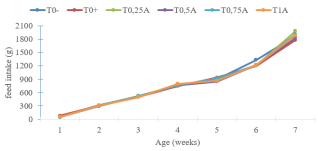
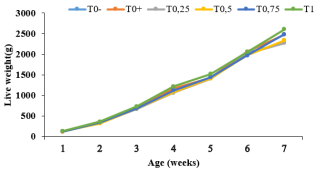
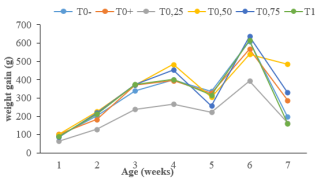
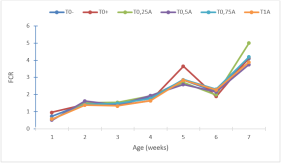
Figures 1 to 4 show the weekly evolution of feed intake, live body weight, weight gain and feed conversion ratio of broilers fed with aqueous extract of Artemisia annua.
3.1.1. Feed Intake
Figure 1 illustrates the effects of aqueous extract of Artemisia annua on feed consumption. Feed intake increased from the 1st to the last week in all the groups. However, the subjects fed with the diet containing 0.25g of aqueous extract of Artemisia annua exhibited the highest feed consumption compared to the other treatments at the 7th week.
Figure 1. Effects of Aqueous Extract Artemisia annua on Evolution of Feed Intake in Broilers.
T0-, control diet without additives; T0+, control diet + 1 g doxycycline/kg of feed; T0.25A, control diet + 0.25 g aqueous extract of Artemisia annua; T0.5A, control diet + 0.50 g aqueous extract of Artemisia annua; T0.75A, control diet + 0.75 g aqueous extract of Artemisia annua; T1A, control diet + 1 g aqueous extract of Artemisia annu.
3.1.2. Live Body Weight
The weekly body weight evolution curves (Figure 2) of the broilers increased similarly with time throughout the trial period. The live weight of broilers fed with feed containing 1 g (T1) of aqueous extract of Artemisia annua was higher than that of the other treatments.
Figure 2. Weekly Evolution of the Live Weight of Broilers Receiving Aqueous Extract of Artemisia annua in Feed.
T0-, control diet without additives; T0+, control diet + 1 g doxycycline/kg of feed; T0.25, control diet + 0.25 g aqueous extract of Artemisia annua; T0.5, control diet + 0.50 g aqueous extract of Artemisia annua; T0.75, control diet + 0.75 g aqueous extract of Artemisia annua; T1, control diet + 1 g aqueous extract of Artemisia annu.
Figure 3. Weekly Evolution of the Weight Gain of Broiler Receiving Aqueous Extract of Artemisia annua in Feed.
T0-, control diet without additives; T0+, control diet + 1 g doxycycline/kg of feed; T0.25, control diet + 0.25 g aqueous extract of Artemisia annua; T0.5, control diet + 0.50 g aqueous extract of Artemisia annua; T0.75, control diet + 0.75 g aqueous extract of Artemisia annua; T1, control diet + 1 g aqueous extract of Artemisia annu.
3.1.3. Weight Gain
The weekly evolution of the weight gain of broiler receiving aqueous extract of Artemisia annua in feed if put to evidence in Figure 3. The weight gain of broilers increased simultaneously from the first to the fourth week for all treatments with broilers of the T0.50 having the highest weight gain. From the fourth to the firth week, we observed a decrease of weight gain and it increased through the sixth before dropping down to the 7th week meanwhile T0.25 maintained the least weight gain throughout.
3.1.4. Feed Conversion Ratio (FCR)
Figure 4 shows the weekly evolution of feed conversion ratio of broilers fed with aqueous extract of Artemisia annua. The FCR of broilers receiving A. annua in feed increased simultaneously from the first to the fourth week after which we observed a rapid increase of the FCR of the positive control treatment (T0+) as compared to other treatments. From the firth to the sixth week, we observed a decrease in the FCR in all treatments and a rapid increase during the seventh week with T0.25 showing the highest record.
Figure 4. Effects of the Aqueous Extract of Artemisia annua on Evolution of Feed Conversion Ratio in Broilers.

T0-, control diet without additives; T0+, control diet + 1 g doxycycline/kg of feed; T0.25, control diet + 0.25 g aqueous extract of Artemisia annua; T0.5, control diet + 0.50 g aqueous extract of Artemisia annua; T0.75, control diet + 0.75 g aqueous extract of Artemisia annua; T1, control diet + 1 g aqueous extract of Artemisia annu.
Table 3 summarizes the effects of the aqueous extract of Artemisia annua on cumulative growth characteristics in broilers.
Throughout the growth phase, no significant (p > 0.05) differences were observed among treatments for feed consumption of the broilers. The greatest live weight was obtained in T0.75-treatment birds with the least value in T0- at 49 days old though these values were generally comparable among the extract-treated groups and the controls, with a similar observation in weight gain. Feed conversion ratio was maximum in T0.25 and least in T1 though no significant difference was registered among the controls and extract-treated birds.
Table 3. Effects of Aqueous Extract of A. annua in Feed on Cumulative Growth Performances of Broilers.

Period (days)

Control treatments

Treatments

P

T0-

T0+

T0.25

T0.5

T0.75

T1

Feed intake (g)

D21

901.85 ±10.93

899.76±25.29

883.95±15.90

863.77±24.49

870.85±17.73

866.25±21.75

0.13

D49

5808.39±83.56

5625.20±80.32

5871.25±39.95

5642.60±175.70

5739.58±157.31

5783.5±183.51

0.27

Live weight (g)

D21

712.50±14.25

711.18±14.23

669.06±17.84

698.37±22.97

689.56±136.00

731.35±123.75

0.069

D49

2203.40±83.92c

2389.34±181.92abc

2212.14±135.56c

2265.05±51.75bc

2428.91±9.9ab

2543.00±83.39a

0.012

Weight gain (g)

D21

678.68±19.23

677.27±14.45

635.54±18.48

655.84±122.72

652.58±135.12

697.56±22.33

0.65

D49

2170.17±84.13c

2355.43±181.31abc

2178.62±136.79c

2231.53±51.75bc

2394.94±10.71ab

2509.21±181.31b

0.012

Feed conversion ratio

D21

1.32±0.03

1.32±0.06

1.39±0.05

1.31±0.07

1.33±0.07

1.24±0.06

0.20

D49

2.67±0.12a

2.39±0.16b

2.70±0.19a

2.52±0.03ab

2.39±0.02b

2.31±0.07b

0.004

a b, c, the means with the same letters on the same line are not significantly different (P >0.05); D, day; T0-, control diet without additives; T0+, control diet + 1 g doxycycline/kg of feed; T0.25, control diet + 0.25 g aqueous extract of Artemisia annua; T0.5, control diet + 0.50 g aqueous extract of Artemisia annua; T0.75, control diet + 0.75 g aqueous extract of Artemisia annua; T1, control diet + 1 g aqueous extract of Artemisia annu, P, probability.
3.2. Effects of Aqueous Extract of Artemisia annua on Carcass Yield and Relative Organs Weights
3.2.1. Carcass Yield
Table 4. Effects of Aqueous Extract of A. annua in Feed on Carcass Characteristics of Broilers.

Organs

Control treatments

Treatments

P

T0-

T0+

T0.25

T0.5

T0.75

T1

Carcass yield 1

85.61± 6.24

92.88± 16.67

90.83± 7.26

85.65± 1.77

88.68± 2.01

84.60± 3.1

0.256

Carcass yield 2

68.70± 5.17b

71.68±1.32abc

74.44± 5.59a

70.18± 1.32bc

72.79± 0.97ab

68.86± 3.38bc

0.015

Head

2.13±0.44

2.16± 0.36

2.44± 0.56

2.20± 0.56

2.35± 0.51

2.11± 0.18

0.503

Feet

3.73± 0.65

3.94± 1.20

3.97± 0.61

3.73± 0.42

3.83± 0.53

3.72± 0.31

0.953

Lungs

1.70±0.14b

1.95±0.17a

1.84±0.17ab

1.90±0.17ab

2.03±0.20a

1.94±0.12a

0.01

Heart

0.46± 0.05ab

0.45± 0.06ab

0.54± 0.14a

0.48± 0.07ab

0.43± 0.13b

0.48± 0.05ab

0.246

Abdominal fat

1.05± 0.53b

1.74± 0.61a

1.34± 0.52ab

1.27± 0.40ab

1.33± 0.52ab

1.50± 0.67ab

0.234

a b, c, the means with the same letters on the same line are not significantly different (P >0.05); T0-, control diet without additives; T0+, control diet + 1 g doxycycline/kg of feed; T0.25, control diet + 0.25 g aqueous extract of Artemisia annua; T0.5, control diet + 0.50 g aqueous extract of Artemisia annua; T0.75, control diet + 0.75 g aqueous extract of Artemisia annua; T1, control diet + 1 g aqueous extract of Artemisia annua, P, probability.
The effects of aqueous extract of Artemisia annua on carcass characteristics is represented on Table 4. There was no significant (p>0.05) difference observed among the controls and those that received the extract in carcass yields 2, despite the fact that some groups had higher values than the others. Similar observations were made for relative weights of lungs, abdominal fats and heart.
3.2.2. Digestive Organs of Broilers
Table 5. Effects of Aqueous Extract of A. annua Diets on Digestive Organs of Broilers.

Organs

Control treatments

Treatments

P

T0-

T0+

T0.25

T0.5

T0.75

T1

Pancreas

1.67±0.20

1.62±0.17

1.59±.15

1.58±0.15

1.63±0.23

1.76±.190

0.42

Gizzard

1.67± 0.40

1.62± 0.24

1.76± 0.23

1.58± 0.15

1.59± 0.35

1.59± 0.15

0.762

Weight of the intestine

89.39± 20.17

87.61± 9.58

90.76± 18.69

93.98± 10.91

97.34± 21.75

101.25± 17.15

0.596

Length of the intestine

174.13±56.56

203.2±15.74

214.03±17.21

208.2±7.6

202.50±0.19

223.12±15.71

0.061

Density of the intestine

0.56± 0.20

0.98± 1.60

0.42± 0.09

0.45± 0.05

0.49± 0.14

0.45± 0.06

0.536

T0-, control diet without additives; T0+, control diet + 1 g doxycycline/kg of feed; T0.25, control diet + 0.25 g aqueous extract of Artemisia annua; T0.5, control diet + 0.50 g aqueous extract of Artemisia annua; T0.75, control diet + 0.75 g aqueous extract of Artemisia annua; T1, control diet + 1 g aqueous extract of Artemisia annua, P, probability.
Table 5 represents the average weights of the digestive organs based on the rate of incorporation of A. annua in the ration. It was noticed that, there was no significant (p>0.05) difference among all treatments as far as all the digestive organs are concerned. Nevertheless, animals of the treatment T1 had the highest weight for organs such as pancreas (1.76±.190), weight and length of the intestine (101.25± 17.15 and 223.12±15.71) and T0.25 the highest weight of the gizzard (1.76±0.23). The smallest weight of the pancreas and density of the intestines was obtained from the treatment T0.5 (1.58±0.15), with the smallest weight of the intestine under the treatment T0+ (174.13±56.56).
3.3. Effects of Aqueous Extract of Artemisia annua on Organs of the Immune System of Broilers
Table 6. Effects of Aqueous Extract of A. annua Diets on Organs of the Immune System of Broilers.

Organs

Control treatments

Treatments

P

T0-

T0+

T0.25

T0.5

T0.75

T1

Spleen’s weight (g)

0.13±0.02

0.15±0.03

0.13±0.02

0.13±0.02

0.14±0.02

0.14±0.00

0.31

Volume spleen (g)

3.14±0.34b

4.12±0.34a

3.62±0.74ab

3.50±0.53Aab

3.75±0.88ab

4.00±0.75a

0.04

Bursa’s weight

0.047±0.009b

0.046±0.007b

0.054±0.003ab

0.047±0.007b

0.059±0.010a

0.052±0.012ab

0.03

Volume bursa

1.65±0.51

1.75±0.46

1.62±0.51

1.18±0.37

1.50±0.53A

1.62±0.51

0.29

a b, the means with the same letters on the same line are not significantly different (P >0.05); T0-, control diet without additives; T0+, control diet + 1 g doxycycline/kg of feed; T0.25, control diet + 0.25 g aqueous extract of Artemisia annua; T0.5, control diet + 0.50 g aqueous extract of Artemisia annua; T0.75, control diet + 0.75 g aqueous extract of Artemisia annua; T1, control diet + 1 g aqueous extract of Artemisia annu, P, probability.
The average weights and volumes of the organs of the immune system (Table 6) show no significant (p>0.05) difference among the controls and birds given the extract for the weight of the spleen and the volume of the bursa. Nevertheless, the volume of the spleen in the positive control treatment (T0+) and the treatment receiving 1 g aqueous extract of A. annua in feed significantly (p<0.05) higher than that of the negative control group (T0-).
3.4. Effects of Aqueous Extract of Artemisia annua on Hematological Characteristics of Broilers
3.4.1. Leucocytes Index of Broiler
Table 7 shows the effects of aqueous extract of Artemisia annua on leucocytes index of broilers. It appears that leucocytes had no significant (p>0.05) difference in all the groups no matter the characteristic considered, except in granulocytes. The concentration of granulocytes was significantly lower in T0.5 than the other groups but comparable to that of T0.25.
Table 7. Effects of Aqueous Extract of Artemisia annua on Feeding Regimes on Leucocytes Index of Broiler.

Characteristics

Controls

Treatments

P

T0-

T0+

T0.25

T0.5

T0.75

T1

WBC

147.27±14.94

151.67±13.62

147.57±10.55

145.27±12.42

151.62±4.38

146.47±6.77

0.9

RBC

2.33±0.15

2.51±0.25

2.48±0.17

2.35±0.26

2.43±0.17

2.40±0.11

0.7

HGB

11.17±1.06

11.52±1.24

11.82±1.04

11.30±1.53

11.65±0.78

11.32±0.47

0.9

HCT

32.60±2.50

33.80±3.59

34.82±2.56

33.05±3.77

33.85±2.18

33.15±0.64

0.8

GRAN

1.05±0.19ab

1.22±0.20a

0.80±0.14bc

0.65±0.10c

1.00±0.23ab

1.30±0.45a

0.01

MID (%)

11.20±1.16

11.88±1.27

10.62±1.13B

9.90±1.92

11.35±0.91

11.10±0.55

0.3

LYM

87.75±2.73

86.85±3.76

88.57±1.26

89.42±3.03

87.40±1.51

87.50±0.35

0.7

MCV

140.10±3.54

134.80±3.57

140.47±5.29

142.90±7.55

139.37±1.18

137.62±4.47

0.2

MCH

47.87±1.51

45.85±0.75

47.57±2.34

49.35±3.92

47.85±1.12

47.35±2.14

0.4

MCHC

34.20±0.92

34.10±1.38

33.87±0.50

34.55±0.69

34.35±0.78

34.45±0.99

0.9

RDW-SD

81.90±4.84

77.42±3.33

84.32±8.63

79.42±6.83

79.12±3.63

79.30±3.23

0.5

RDW-CV

11.62±1.25

11.57±0.65

12.25±1.96

10.93±0.41

11.10±0.60

11.85±1.58

0.6

a, b, c, the means with the same letters on the same line are not significantly different (P >0.05); T0-, control diet without additives; T0+, control diet + 1 g doxycycline/kg of feed; T0.25, control diet + 0.25 g aqueous extract of Artemisia annua; T0.5, control diet + 0.50 g aqueous extract of Artemisia annua; T0.75, control diet + 0.75 g aqueous extract of Artemisia annua; T1, control diet + 1 g aqueous extract of Artemisia annu, P, probability; WBC, White Blood Cells; RBC, Red Blood Cell; HGB, Hemoglobin; HTC, Hematocrit; MCV, Mean corpuscular volume; MCH, Mean Hemoglobin Concentration; GRAN, Granulocytes, LYM, Lymphocytes, MCV, Mean Corpuscular Volume; MCH, Mean Corpuscular Heamoglobin; RDW, Red-cell Distribution Width.
3.4.2. Platelet Index
The effects of aqueous extract of Artemisia annua on platelet index of broiler is represented by Table 8.
It was observed for PDW that, the treatment receiving 1% (T1) was comparable to the controls (T0- and T0+). However, PDW count was significantly lower in the treatments receiving 0.25, 0.5, and 0.75% than in T0- but comparable to the positive control treatment (T0+). T0- and T0.25 recorded significantly (p<0.05) lower platelet counts than the other birds and the greatest count was obtained in T1.
Table 8. Effects of Aqueous Extract of Artemisia annua on Feeding Regimes on Platelet Index of Broiler.

Characteristics

Control

Treatments

P

T0-

T0+

T0.25

T0.5

T0.75

T1

PLT

26.33±4.49d

45.66±3.09b

28.66±1.69d

37.33±3.09c

46.75±8.05ab

54.00±6.53a

0.00

MPV

6.15±1.16

5.62±0.26

5.80±0.82

5.52±0.46

5.65±0.26

5.97±0.84

0.82

PDW

7.92±0.95a

7.12±0.81ab

6.06±0.18b

6.25±1.17b

6.02±0.35b

7.70±0.66a

0.00

PCT

0.03±0.01

0.03±0.01

0.02±0.00

0.03±0.01

0.02±0.00

0.04±0.01

0.28

P-LCR

9.95±3.25

8.40±2.54

9.53±2.36

8.37±2.38

8.70±1.66

10.10±2.50

0.84

a b, c, d, the means with the same letters on the same line are not significantly different (P >0.05); T0-, control diet without additives; T0+, control diet + 1 g doxycycline/kg of feed; T0.25, control diet + 0.25 g aqueous extract of Artemisia annua; T0.5, control diet + 0.50 g aqueous extract of Artemisia annua; T0.75, control diet + 0.75 g aqueous extract of Artemisia annua; T1, control diet + 1 g aqueous extract of Artemisia annu, P, probability, PLT, Platelet; MPV, Mean Platelet Volume; PDW, Platelet Distribution Width; PCT, Platelerit.
3.5. Effects of Aqueous Extract of Artemisia annua on the Intestinal Microflora of Broiler
Table 9 is a brief summary of the effects of aqueous extract of Artemisia annua on the intestinal microflora of broilers. T0.75 recorded significantly lower values for Escherichia coli in comparison to the other groups. Nevertheless, the other extract-treated birds registered values for E. coli which are similar to those of the controls. On the other hand, lactobacillus recorded values significantly lower in T0+ than the others, with T0.5, T0.75 and T1 having similar values with T0-.
Table 9. Effects of Aqueous of Artemisia annua Extract on Feeding Regimes on the Intestinal Microflora of Broiler.

Parameters

Control

Treatments

P

T0-

T0+

T0.25

T0.5

T0.75

T1

E. coli

4.96±0.49b

5.55±0.34ab

6.03±0.42a

5.20±0.52b

4.84±0.35c

5.82 ± 0.26ab

0.00

Salmonella

3.38±0.27

3.31±0.34

3.43±0.13

3.81±0.39

2.76±0.31

3.99±0.23

0.05

Lactobacillus

3.36±0.35b

2.85±0.32c

3.90±0.27a

3.70±0.24ab

3.44±0.38ab

3.48±0.16ab

a b, c, the means with the same letters on the same line are not significantly different (P >0.05); T0-, control diet without additives; T0+, control diet + 1 g doxycycline/kg of feed; T0.25, control diet + 0.25 g aqueous extract of Artemisia annua; T0.5, control diet + 0.50 g aqueous extract of Artemisia annua; T0.75, control diet + 0.75 g aqueous extract of Artemisia annua; T1, control diet + 1 g aqueous extract of Artemisia annua, P, probability.
4. Discussion
The present study revealed that, the inclusion of the aqueous extract of A. annua at different levels in the diet of broiler had no significant effect on cumulative feed intake, irrespective of the period. This could be explained by the absence of alkaloids and the poor quantity of tannins (1.23 mg/g) in the aqueous extract of A. annua that did not impair palatability, allowing adequate intake. This result corroborates that of , who reported that incorporating 2% and 4% D. glomerata in feed respectively had no significant effect on feed consumption during the starter phase. This result equally agrees with that of who reported that the administration of Tetrapleura tetraptera powder through cold water, hot water, and food does not induce any significant effect on the feed consumption of broiler chickens. On the other hand, reported a significant increase in feed intake of broiler chickens that received garlic and ginger powder and infusion in their diet. Birds consume less of the feed that has a bitter taste, followed by salty, sour, and sweet, according to . This also contradicts that of who noted that feed intake in broiler significantly decreases with the incorporation of neem leaf powder (4%) into the feed which could be explained by the presence of solanine (1.3 mg/g), a triterpenoid found in neem that can inhibit feed consumption in animals by reducing their appetite .
Throughout the trial, the animals receiving aqueous extract of A. annua at 0.75% and 1% showed higher live weight and weight gain than those of the control treatments. This could be explained by the presence of the active principles present in the A. annua powder, thus allowing for effective action. Also, the diets containing the aqueous extract of A. annua registered a significant increase in the live weight and weight gain of broiler at the finishing phase. In disagreement with this, it was demonstrated by that putting 2g/kg of the powder of turmeric rhizome in feed of broiler resulted in non-significant difference in live weight and weight gain. The increase in weight gain and live weight observed in the present study could be attributed to the anti-inflammatory and antioxidant activities of the phenolic compounds found in these plants. According to , substances with antioxidant properties could reduce reactive oxygen species that attack the membranes of animal cells, thereby increasing the thickness of the cell membrane and the weight of the animal.
Animals fed with rations supplemented with 0.25 of extract of A. annua in feed recorded lower feed conversion ratio (FCR) compared to the control treatment, which had higher FCR than the rest of the treatments. These results are similar to those of , who reported a decrease in the FCR of broiler chickens receiving varying levels of garlic in their feed. These results may be due to the presence of tannins at the end of the extraction process and after analysis had a concentration of 1.23 mg/g, by their ability to complex proteins, sugars, and minerals, may have reduced the availability of certain substrates essential for bacterial growth and consequently improved feed efficiency. This would involve improving weight performance and consequently that of the FCR.
There was no significant (p>0.05) difference observed generally among the controls and those that received the extract in carcass yields 2, despite the fact that some groups had higher values than the others. Similar observations were made for relative weights of lungs, abdominal fats and heart. These results are in agreement with those of , who recorded no significant effect from the incorporation of increasing rates of neem oil on carcass characteristics and the relative weight of organs compared to antibiotics and the diet without additives. However, effects of incorporating A. annua at increasing rates in feed on the digestive organs of broiler showed no significant differences between treatments for the various studied characteristics.
The production of E. coli and lactobacillus decreases with the increase of the aqueous extract in feed, that’s from the treatment receiving 0.25g to 0.75g of the extract. This decrease in lactobacillus and the decrease in pathogenic microbes (E. coli) in the digestive tract of chickens could explain their poor health conditions encountered by the end of the trial, which was due to seasonal change and heavy rain falls. Furthermore, the addition of A. annua, regardless of the rate in the feed, did not significantly affect the number of pathogenic microbes (salmonella) with the animals consuming feed with 1g/kg of A. annua having the highest production of salmonella (3.99±0.23). Similar results were reported by with the addition of 1.5% turmeric rhizome powder in the feed of broiler. It disagrees with that of , who reported that the number of lactobacilli significantly increased in the digestive tract with the inclusion of methylamine both in the feed and in acidified or non-acidified water compared to the controls.
The incorporation of increasing rates of aqueous extract of A. annua had no significant effect on the hematological parameters of broiler. However, the increasing rates of the extract tend to increase the levels of hematocrits, blood platelet, lymphocytes, red-cells distribution width and heamoglobin compared to the control treatments. Also, the increasing rates of the extract tend to decrease the levels of platelet distribution width, mean platelet distribution volume, and granulocytes compared to the control treatments. These results are similar with those of who recorded an increase in the number of hemoglobin in broiler chickens receiving aqueous extracts of ginger. They are equally consistent with those of who recorded no significant difference in heamoglobin (HGB) levels in chickens subjected to different garlic incorporation rates. However, this is in contradiction with that of , who registered in broiler, that the heamoglobin level (7.75 mg/dl) and hematocrit level (30.16%) increase when aqueous garlic extracts (20 ml/L) are given in drinking water.
5. Conclusions
In conclusion, aqueous extract of A. annua has a very beneficial effect on growth performance at a rate of 1g/kg of feed for most considered characteristics like the highest weight and the least value of feed conversion ratio. The extract of A. annua in feed modulated the intestinal microflora in favor of a pathogenic bacteria (E. coli) and to the detriment of beneficial bacteria (Lactobacillus) and pathogenic bacteria (salmonella). Aqueous extract of A. annua had no negative effect on the hematological parameters. Thus, aqueous extract of A. annua had greater beneficial effects in most characteristics at a rate of 1 g/kg feed, and may be used as natural source of feed additive in broilers instead of antibiotics since values were not generally significantly different from those of birds given antibiotic showing no harmful consequences.
6. Recommendations
Looking at the findings of this work, it will be interesting to carry out further studies on the effects of aqueous extract of A. annua in drinking water since the effects of products vary with doses, form as well as mode of administration. It will equally be interesting to evaluate their effects on the quality of meat.
Abbreviations

FCR

Feed Conversion Ratio

FI

Feed Intake

LW

Live Weight

WG

Weight Gain

Ca

Calcium

P

Phosphorus

DM

Dry Matter

E

Energy

T0+

Control Diet + 1 G Doxycycline/Kg of Feed

T0.25

Control Diet + 0.25 g Aqueous Extract of Artemisia annua

T0.5

Control Diet + 0.50 g Aqueous Extract of Artemisia annua

T0.75

Control Diet + 0.75 g Aqueous Extract of Artemisia annua

T1

Control Diet + 1 g Aqueous Extract of Artemisia annua

P

Probability

WBC

White Blood Cells

RBC

Red Blood Cell

HGB

Hemoglobin

HTC

Hematocrit

MCV

Mean Corpuscular Volume

MCH

Mean Hemoglobin Concentration

GRAN

Granulocytes

LYM

Lymphocytes

MCV

Mean Corpuscular Volume

MCH

Mean Corpuscular Heamoglobin

RDW

Red-cell Distribution Width

Acknowledgments
Authors declare that no financial help was received for this work.
Author Contributions
Chongsi Margaret Mary Momo: Conceptualization, Funding acquisition, Validation, Writing – original draft, Writing – review & editing
Noumbissi Marie Noel Bertine: Formal Analysis, Investigation, Methodology, Writing – review & editing
Bend Emma Fortune Magloire: Formal Analysis, Methodology, Writing – review & editing
Mweugang Ngouopo Nathalie: Methodology, Validation, Writing – review & editing
Jatsa Cyntia Dorimene: Conceptualization, Funding acquisition, Methodology, Writing – original draft
Sambou Ngonseu Charlin Noël: Conceptualization, Data curation, Funding acquisition, Methodology
Miégoué Emile: Supervision, Validation, Writing – original draft
Tendonkeng Fernand: Conceptualization, Supervision, Writing – original draft, Methodology
Conflicts of Interest
The authors declare no conflicts of interest.
References
[1] Structures and organization of broiler chicken sectors in Europe, comparative analysis of the German, British, Spanish, Dutch and Belgian sectors; ITAV Economics Department, 106p.
[2] The use of antimicrobial substances in animal production: positions of experts and governments. Quebec Public Policy and Health Collection. 75p diets for poultry. World’s poultry Science Journal, 65(12), 23-28.
[3] Chardon, H., & Brugere, H. (2014). Use of antibiotics in livestock farming and the meat industry. Animal Health and Safety Reports. Meat Information Center. 35 p.
[4] Tindo, T. R. K., Ngouana, T. R., Kana, S. A. D., Ciza, A. P., Donfack, M. Mouchili, F. M., Tchakounte, D. G., Tchouan, N. L. W., Edie, N., Taboumda, E., & Kana, J. R. (2022). Effects of neem oil (Azadirachta indica) on feed digestibility, growth performance and gut microbiota of broilers chickens. Scientific Journal of Animal Science, 10(6), 767-775.
[5] Onu, P. N. (2010). Evaluation of two herbal spices feed additives for finisher broilers. Biotechnology in Animal Husbandry, 26(5-6), 383-392.
[6] Krishan, G., & Narang, A. (2014). Use of essential oils in poultry nutrition: A new approach. Journal of Advance Veterinary and Animal Research, 1, 156-162.
[7] Shalukoma, C., J. Bocreat, J., Duez, P., Pongombo, C., & Visser, M. (2015). Medicinal plants of the Kahuzi-Biega mountain region in the Democratic Republic of Congo: use, accessibility, and consensus among traditional healers. Tropical Woods and Forests, 326(4).
[8] Bashige, V., Bakari, A., Okusa, P., Kalonda, E., & Lumbu, J. (2020). Phytochemical screening and antimicrobial activity of six edible rhizomes used in traditional medicine in Lubumbashi (DRC). Internationale Journal of Biologiecal and Chemical Sciences, 14(4), 1367-1380.
[9] Dieumou, F. E., Teguia, A., Kuite, J. R., Tamokou, J. D., Fonge, N. B., & Dongmo, M. C. (2009). Effects of ginger (Zingiber officinale) and garlic (Allium sativum) essential oils on growth performance and gut microbial population of broiler chickens. Livestock Research for Rural Development, 21, 131.
[10] Ruiz-Navajas, Y., Viuda-Martos, M., Sendr, E., Perez-Avarez, J. A. F., & Fernandez-Lopez. (2013). In vitro antibactérial and antioxidant Properties of chitosan edible films incorporated with Thymus moroderi pr Thymus piperella essential oils. Food Control, 30, 386-392.
[11] Arokiyaraj, S., Sripriya, N., Bhagya, R., Radhika, B., Prameela, L., & Udayaprakash, N. K. (2012). Phytochemical screening, antibacterial and free radical scavenging effects of Artemisia nilagirica, Mimosa pudica and Clerodendrum siphonanthus – An in–vitro study. Asian Pacific Journal of Tropical Biomedicine, 2(2), 601-604.
[12] Rani, S., Adish Kumar, S., Kaliappan, S., Ick-Tae, Y., & Banu, J. R. (2012). Low temperature thermo-chemical pretreatment of dairy waste activated sludge for anaerobic digestion process. Bioresource Technology, 103(1), 415-424.
[13] Banso, A., & Adeyemo, S. (2010). Phytochemical screening and antimalarial assessment of Abutilon mauritianum, Bacopa monnifera and Datura stramonium. Biokemistri, 18, 39-44.
[14] Ngbede, J., Yakubu, R. A., & Nyam, D. A. (2008) Phytochemical Screening for Active Compounds in Canarium Schweinfurthii (Atile) Leaves from Jos North, Plateau State, Nigeria. Research Journal of Biological Sciences, 3, 1076-1078.
[15] Kana, J. R., Ngouana, T. R., Mube, K. H., Tefack, Y., Zambou, H., & Teguia, A. (2014. Valorization of cassava residues as a substitute for maize in the feed ration of broiler chickens. Livestock Research for Rural Development 26(3), 2014.
[16] Kana, J. R., Mube, K. H., Ngouana, T. R., Tsafong, F., Komguep, R., Yangoue, A., & Teguia, A. (2017a). Effect of dietary mimosa small bell (Dichostachys glomerata) fruit supplement as Aalternative to antibiotic growth promoter for broiler chicken. Journal World Poultry, 7, 27-34.
[17] Nweze, B. O., Nwankwegu, A. E., & Ekwe, O. O. (2011). The performance of the broilers chickens on African porridge fruit (Tetrapleura tetraptera) pod under different feeding regimes. Asian Journal of Poultry Science, 5(4), 144-149.
[18] Vivian, U. O., Chukwu, G. C., & Adeolu, A. I. (2014). Effect of ground ginger and garlic on the growth performance, carcass quality and economics of production of broiler chickens. Global Journal of Bio-science and Biotechnology, 3(3), 225-229.
[19] Bouvarel, I., Tesseraud, S., & Leterrier, C. (2010). Feed intake in broiler chickens: let's not forget short-term regulations. INRA Animal Production, 23(5), 391-404.
[20] Durrani, F. R., Sultan, A., Jan, M., Chand, N., & Durrani, Z. (2008). Immunomodulatory and growth promoting effects of neem (Azadirachta indica) leaves infusion in broiler chicks. Sarhad Journal of Agriculture, 24(4), 655-659.
[21] Singh, M. K., Singh, S. K., Sharma, R. K., Singh, B., Kumar, S., & Joshi, S. K. (2015). Performance and carcass characteristics of guinea fowl fed on dietary Neem (Azadirachta indica) leaf powder as a growth promoter. Iranian Journal of Veterinary Research, 16(1), 78-82.
[22] Rahmatnejad, E., Roshanfekr, H., Omid, A., Mamoosee, H., & Ashayerizadeh, A. (2009). Evaluation the effect of several non-antibiotic additives on growth performance of broiler chickens. Journal of Animal and Veterinary Advances, 8(8), 1670-1673.
[23] Tchoffo, H., Kana, J. R., Ngoula, F., Ngoumtsop, V. H., Ngouozeu, W. M., Tadondjou, C. D., & Folack, T. L. V. (2019). Effects of ginger (Zingiber officinale, Roscoe) essential oil on growth and laying performances, serum metabolites, and egg yolk antioxidant and cholesterol status in laying Japanese quail. Journal of Veterinary Medecine: 755-765.
[24] Makwana, R. B., Parikh, S. S., Savaliya, B. D., Chauhan, H. D., Patil, S. S., & Patbandha, T. K. (2018). Growth performance and carcass characteristics of broilers fed garlic (Allium sativum) supplemented diets. International Journal of pure and Applied Bioscience, 6, 927-932.
[25] Ouedraogo, B., Sanou, J., Nikiema, Z. S., & Zoundi, S. J. (2021). Effects of using turmeric rhizome powder as a feed additive on growth performance and carcass characteristics of broiler chickens. Journal of Applied Biosciences, 163, 16820-16833.
[26] Kengni, N. G. J., Kana, J. R., Ngouana, T. R., Ebile, D. A., Tchouan, D. G., Necdem, T. B. V., Edie, N. L. W., Ngwa, B. E., & Teguia, A. (2020). Effects of supplementing graded levels of methenamine in drinking water on growth performance, gut microbiota, organs histology and haemato-biochemical profile of broiler chickens. Scientific Journal of Animal Science, 9(3), 587-598.
[27] Prasad, R., Rose, M. K., Virmani, M., Garg, S. L., & Puri, J. P. (2009). Lipid profile of chiken (Gallus domesticus) in response to dietary supplementation of garlic (Allium sativum). International journal of poultry science, 8, 270-276.
[28] Yasar, J., Sarzamin, K., Naila, C., Muhammad, M., Asad, S., Rafiullah, & Abdul, J. T. (2012). Comparative efficacy of different schedules of administration of medicinal plants mixed infusion on hematology of broiler chicks. Sarhad Journal Agriculture, 28, 327-331.
Cite This Article
  • APA Style

    Momo, C. M. M., Bertine, N. M. N., Magloire, B. E. F., Nathalie, M. N., Dorimene, J. C., et al. (2026). Effects of Aqueous Extract of Artemisia Annua on Immune System, Hematological Characteristics, Intestinal Micro-flora, Growth Performances and Carcass Yield of Broilers. International Journal of Animal Science and Technology, 10(1), 1-13. https://doi.org/10.11648/j.ijast.20261001.11

    Copy | Download

    ACS Style

    Momo, C. M. M.; Bertine, N. M. N.; Magloire, B. E. F.; Nathalie, M. N.; Dorimene, J. C., et al. Effects of Aqueous Extract of Artemisia Annua on Immune System, Hematological Characteristics, Intestinal Micro-flora, Growth Performances and Carcass Yield of Broilers. Int. J. Anim. Sci. Technol. 2026, 10(1), 1-13. doi: 10.11648/j.ijast.20261001.11

    Copy | Download

    AMA Style

    Momo CMM, Bertine NMN, Magloire BEF, Nathalie MN, Dorimene JC, et al. Effects of Aqueous Extract of Artemisia Annua on Immune System, Hematological Characteristics, Intestinal Micro-flora, Growth Performances and Carcass Yield of Broilers. Int J Anim Sci Technol. 2026;10(1):1-13. doi: 10.11648/j.ijast.20261001.11

    Copy | Download

  • @article{10.11648/j.ijast.20261001.11,
      author = {Chongsi Margaret Mary Momo and Noumbissi Marie Noel Bertine and Bend Emma Fortune Magloire and Mweugang Ngouopo Nathalie and Jatsa Cyntia Dorimene and Sambou Ngonseu Charlin Noël and Miégoué Emile and Tendonkeng Fernand},
      title = {Effects of Aqueous Extract of Artemisia Annua on Immune System, Hematological Characteristics, Intestinal Micro-flora, Growth Performances and Carcass Yield of Broilers},
      journal = {International Journal of Animal Science and Technology},
      volume = {10},
      number = {1},
      pages = {1-13},
      doi = {10.11648/j.ijast.20261001.11},
      url = {https://doi.org/10.11648/j.ijast.20261001.11},
      eprint = {https://article.sciencepublishinggroup.com/pdf/10.11648.j.ijast.20261001.11},
      abstract = {Antibiotic residues are constantly being deposited in human organisms from the consumption of food of animal origin, leading to resistance and the health risks related to their use as growth promoters in animal feed and this has led to the ban of their use in animal feed by authorities. This restriction of their use has led to a resurgence of morbidity and mortality, a drop in growth performance, and consequently a decline in the economic profitability of farms making researchers to seek substitutes that play the same role without the same side effects. Plant-based products have been shown to possess properties that can play this role but their effects vary with form, dose, mode of administration and other factors. The present study was therefore designed to assess the effects of increasing levels of A. annua aqueous extract on growth performance, carcass and immune system organ characteristics, hematological parameters and intestinal microflora of broiler chickens. 288-day-old chicks were allocated to a completely randomized system comprising a base ration with no additives (T0-), a ration containing 0.1% antibiotic (T0+) and four rations with inclusions of 0.25, 0.5, 0.75 and 1 g aqueous extract of A. annua/Kg of feed with 3 replications each containing 16 chicks and treated till 49 days of age before sacrificing for data collection. The main results showed that the greatest live weight was obtained in T0.75-treatment birds with the least value in T0- at 49 days old with highest weight gain in T1. Feed conversion ratio was maximum in T0.25 and least in T1. T0.75 recorded significantly lower values for Escherichia coli while lactobacillus recorded values significantly (p+ than the others. Granulocytes and platelets registered the greatest values in T1. Thus, aqueous extract of A. annua had greater beneficial effects in most characteristics at a rate of 1 g/kg feed, and may be used as natural source of feed additive instead of antibiotics in broilers.},
     year = {2026}
    }
    

    Copy | Download

  • TY  - JOUR
    T1  - Effects of Aqueous Extract of Artemisia Annua on Immune System, Hematological Characteristics, Intestinal Micro-flora, Growth Performances and Carcass Yield of Broilers
    AU  - Chongsi Margaret Mary Momo
    AU  - Noumbissi Marie Noel Bertine
    AU  - Bend Emma Fortune Magloire
    AU  - Mweugang Ngouopo Nathalie
    AU  - Jatsa Cyntia Dorimene
    AU  - Sambou Ngonseu Charlin Noël
    AU  - Miégoué Emile
    AU  - Tendonkeng Fernand
    Y1  - 2026/01/16
    PY  - 2026
    N1  - https://doi.org/10.11648/j.ijast.20261001.11
    DO  - 10.11648/j.ijast.20261001.11
    T2  - International Journal of Animal Science and Technology
    JF  - International Journal of Animal Science and Technology
    JO  - International Journal of Animal Science and Technology
    SP  - 1
    EP  - 13
    PB  - Science Publishing Group
    SN  - 2640-1312
    UR  - https://doi.org/10.11648/j.ijast.20261001.11
    AB  - Antibiotic residues are constantly being deposited in human organisms from the consumption of food of animal origin, leading to resistance and the health risks related to their use as growth promoters in animal feed and this has led to the ban of their use in animal feed by authorities. This restriction of their use has led to a resurgence of morbidity and mortality, a drop in growth performance, and consequently a decline in the economic profitability of farms making researchers to seek substitutes that play the same role without the same side effects. Plant-based products have been shown to possess properties that can play this role but their effects vary with form, dose, mode of administration and other factors. The present study was therefore designed to assess the effects of increasing levels of A. annua aqueous extract on growth performance, carcass and immune system organ characteristics, hematological parameters and intestinal microflora of broiler chickens. 288-day-old chicks were allocated to a completely randomized system comprising a base ration with no additives (T0-), a ration containing 0.1% antibiotic (T0+) and four rations with inclusions of 0.25, 0.5, 0.75 and 1 g aqueous extract of A. annua/Kg of feed with 3 replications each containing 16 chicks and treated till 49 days of age before sacrificing for data collection. The main results showed that the greatest live weight was obtained in T0.75-treatment birds with the least value in T0- at 49 days old with highest weight gain in T1. Feed conversion ratio was maximum in T0.25 and least in T1. T0.75 recorded significantly lower values for Escherichia coli while lactobacillus recorded values significantly (p+ than the others. Granulocytes and platelets registered the greatest values in T1. Thus, aqueous extract of A. annua had greater beneficial effects in most characteristics at a rate of 1 g/kg feed, and may be used as natural source of feed additive instead of antibiotics in broilers.
    VL  - 10
    IS  - 1
    ER  - 

    Copy | Download

Author Information
  • Abstract
  • Keywords
  • Document Sections

    1. 1. Introduction
    2. 2. Materials and Methods
    3. 3. Results
    4. 4. Discussion
    5. 5. Conclusions
    6. 6. Recommendations
    Show Full Outline
  • Abbreviations
  • Acknowledgments
  • Author Contributions
  • Conflicts of Interest
  • References
  • Cite This Article
  • Author Information